
Meet The Author
February 2026
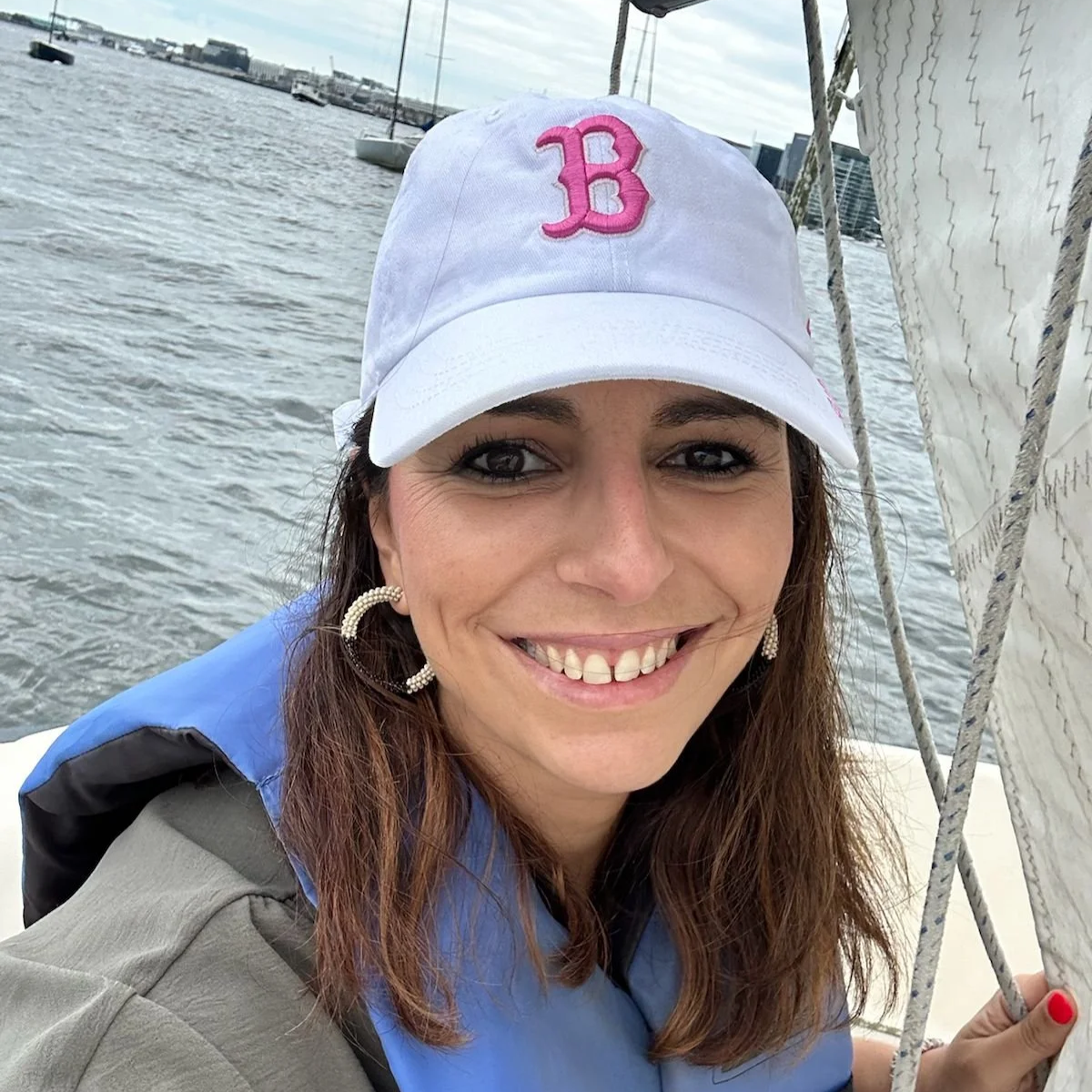
Agustina Anson DVM, MSc, PhD, DECVDI
I’m from Spain. I completed my residency in Murcia (Spain), but spent one of those years split between Dublin and Glasgow. I’m currently working at Tufts University in the US. I have two little kids (5 and 7 years old) and a black Lab named Lola. The beach is my happy place!!
Accuracy and Feasibility of Ultrasound in the Diagnosis of Otitis Media in Cats
T. Chan, R. Almela, A. Anson
The Study Background
We routinely use ultrasound to evaluate the tympanic bulla in cats and dogs, and we have found it to be particularly helpful for ruling out otitis media in cats. Given how practical and well-tolerated this technique is, we wanted to share our experience with other specialists and promote wider use of ultrasound for assessing feline middle ear disease.
What is the primary knowledge gap your study aims to address?
There really wasn’t good information on how well ultrasound works for diagnosing naturally occurring otitis media in client-owned cats. Previous studies were mostly done in cadavers or experimental settings, and there was still concern that ultrasound might miss disease because it can only image part of the tympanic bulla. Our goal was to see how accurate ultrasound actually is when used in real clinical patients.
The Study Design
This was a diagnostic accuracy study. We enrolled cats that were already scheduled for CT or MRI of the head. Each cat also had a tympanic bulla ultrasound without sedation, prior to the CT/MRI study. We then compared the ultrasound findings to CT or MRI (which we used as the gold standard) to see how well ultrasound could identify middle ear disease. The main goal was to find out if ultrasound is both accurate and practical in a clinical setting.
What are the main study results?
Overall, ultrasound performed really well. The exam was quick (usually just a few minutes) and most cats tolerated it without needing sedation. Ultrasound correctly identified otitis media in most cases, with very high accuracy. When ultrasound detected fluid, it was always correct, and when it looked normal, it was correct in the vast majority of cases. The few missed cases involved very tiny amounts of fluid that were visible on CT or MRI but difficult to detect with ultrasound.
Were there any unexpected results or challenges during your research?
One interesting finding was that in a cat with long-standing, chronic disease, ultrasound didn’t show fluid but instead produced an acoustic shadow. This turned out to be related to thickening of the bulla wall on CT, suggesting that this ultrasound finding may actually be a clue for chronic otitis media. A key challenge was that ultrasound can miss very small fluid volumes, so it’s not perfect in every case.
Takeaways from this study
This study reinforces that ultrasound can be integrated as a first-line or adjunct diagnostic tool in cats suspected of otitis media, particularly when CT or MRI is not immediately available.
What future directions would you like to explore based on this study?
We did not include any patients with middle ear polyps and therefore we do not know if we would be able to differentiate them from otitis. So, it would be very interesting to test it in cases of middle ear polyps.